Showing posts with label Friendship Groups. Show all posts

March 22, 2009

Children Keeping it Simple, Teaching Simplicity


A few inspiring comments from my teachers in simplicity, children.
  • I was participating in Seattle’s Martin Luther King, Jr., March and Rally this year with some of the faculty, students and parents from the school I work at. During the march one of our first graders looked up at me and said, “Oh, I know why you’re here today, Ashley.” “Why?” I asked. “Because this is all about friendship… and you’re the friendship teacher.”

    (fyi: I host Friendship Groups, a class that all the students in the class participate in just like math or reading. The aim is to help students deepen their ability to connect with and understand themselves and others. It's all about friendship... with ourselves, others and the world around us!)

  • During Obama's presidential inauguration Rev. Joseph Lowery was talking about love,
    "And now, Lord, in the complex arena of human relations, help us to make choices on the side of love, not hate; on the side of inclusion, not exclusion; tolerance, not intolerance."

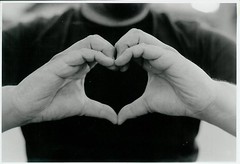
    I looked in front of me as a Kindergartner was staring down at his little hands, shaping them into a heart. That image summed up where my hope for our future lies... in love.

  • After the inauguration we hosted an Open Space with the 3rd graders. One child's closing remarks, "I learned that when everyone pitches in just a little bit, it can make a giant difference."

  • Words of wisdom that a 2nd grader told me over lunch one day that I am practicing and trying to better embody, "Just listen until your mind gets deeper and then you'll understand."
I am so grateful for all the gifts that are bestowed upon me by these wise humans who are so willing to share their world.

heart photo by samantha celera

March 21, 2009

Keep Your Brain Entertained


An interesting npr segment on how active our brain gets when we are bored. Daydreams can suck us into an ever-interesting world of distraction. According to this article, if you want to stay engaged with the content at hand, keep your body engaged on something such as doodling. Don't let the mental activity get the best of you if you want to continue focusing, give your hands something else to do.
When the brain lacks sufficient stimulation, it essentially goes on the prowl and scavenges for something to think about. Typically what happens in this situation is that the brain ends up manufacturing its own material.

In other words, the brain turns to daydreams, fantasies of Oscar acceptance speeches and million-dollar lottery wins. But those daydreams take up an enormous amount of energy.

The function of doodling, according to Andrade, who recently published a study on doodling in Applied Cognitive Psychology, is to provide just enough cognitive stimulation during an otherwise boring task to prevent the mind from taking the more radical step of totally opting out of the situation and running off into a fantasy world.
When I host small Friendship Groups with students, I often put a bowl of rocks, shells, stick, cones into the middle of the circle in case anyone needs something to fiddle with. A group the other day began building with the objects while we were discussing some of their problems and concerns. Their sculptures were beautiful and inspiring and a nice example for this article! One child preferred the erasers!

May 06, 2007

What Can We Give to Others?

We each have a lot to give.
“Each of us possesses a wealth of ideas, talents, skills, and the fruits of our interests that we can share with others. Some people give their singing, some give vegetables from their garden, some give cookies, some give poems or paintings.” Some give compliments, some give encouragement.

“Even if all personal skills and talents were set aside, there are some things that we all can give: time, energy, and attention.”

“If, as a society, we want to raise caring adults, it will be important to provide opportunities for young people to find out what their gifts are and to experience themselves as givers – active, aware givers.”

“We will also want our children to practice being receivers – active, aware receivers. Willingness to receive from another is an additional gift that we all have to give. Receiving a gift with genuine acknowledgment and appreciation for the giver generates a flow of goodwill. The result is that each person is an equal partner in a dance of mutual giving.”
from The Compassionate Classroom by Sura Hart and Victoria Kindle Hodson.

In the Kindergarten classes we discussed that we all have things that we can share and give to others. I asked the students what they have to give to others. Here is what the three classes came up with:

* Love
* Thanks
* Friendship
* Our body and energy to help win a game
* A house
* Confidence
* Expectance
* Respect
* Fool’s gold
* Songs – say or play them
* Clothes
* Leggos/toys
* Ice cream
* Animals
* Water bottles
* Listening
* Ideas
* Patience Sharing with others
* Valentine’s day cards
* Clothes – to people and children that need things
* Money to people to buy things
* Buy toys for others
* Listen to them
* Gifts
* Attention
* Money from our allowance (give to the poor)
* Smiles
* Songs
* Hugs
* Things that they need
* Listen, Give them attention
* Kisses
* Letters
* Packages
* Papers
* Pictures
* Poems
* Kindness
* Doing good things – running, climbing
* Tips
* Valentine hugs
* Hugs
* Skills to protect themselves
* Help to people
* Valentine kisses
* Moves to help themselves
* Candy and presents

It was also mentioned that some families have a “Give Away Basket” or “Goodwill Basket” where anyone in the family can put clothes or toys or other items to give to others who are not as fortunate as we are.

Making Our Fraction of the World a Better Place

A small group of third grade boys decided they wanted to discuss the topic of How to make school a better place and improve it. The conversation went to the topic of global warming. I asked the students if they really thought that it was possible for the seven of us in this room to do something that could make a difference. One child responded, “We can help make our fraction of the world a better place.” Below are the ideas and comments that emerged around this theme.

What can we do right now to make our fraction of the world a better place?

Help with Global Warming
  • Water all the plants to help since with global warming there is not enough water in parts of the Earth.
  • Use lights less
  • Get a car that doesn’t run on gas
  • Don’t waste paper
  • Use water sparingly
  • Use biodiesel
“Lots of people are suffering from global warming – some are people I know who don’t have enough water.”

Use less water
  • Take showers instead of baths. Take short showers
  • Turn off water when shaving or brushing your teeth
  • Don’t flush the toilet if you don’t have to
“I did an experiment. I took a one minute bath and a one minute shower. The bath took more water. That surprised me. Showers can be more effective.”

“In some places you can’t even water your garden. That’s sad.”

“If you’re doing something that seems normal to you, think about other people who can’t do that.”

Ashley asks, “What are some things that we have or are doing right now that other people might not have?”
  • We have toys in here that others don’t have
  • Watches
  • Access to special drinks that others don’t have
  • Health and protection
  • Medicine
  • Electricity
  • Warm clothing
More things we can do to make our fraction of the world a better place

* Turn lights off if you don’t need them
* Use light bulbs that use less electricity
* Think about how we can help people that don’t have as much as we do
* Donate foot, water, money, shelter, clothes, tents
* Donate books that you are not reading anymore or if you have more than one copy
* Have a yard sale and then donate some or all of the money that you make
* You can donate to the donation truck or Salvation Army

“Little things can lead up to big things… like pushing in chairs to make more space.”

More things we can do right now to make our fraction of the world a better place:
  • Respect elders and older people.
    • They don’t want to feel like idiots or to feel like they’re crazy because they’re old.
    • They are wise because they’ve learned a lot of stuff through going through life.
    • They’ve witnessed things that other people haven’t – they know what it’s like
    • Ask them questions and inquire about their life.