Thank You For Helping Me Be Me by ashleycooper, thomasart on Storybird
I love this new website, Storybird, where you can pick from some wonderful and inspiring artwork and then create your own story.
Here are a few more that I've found or that friends have shared with me. If you write one, please do let me know so I can read it. And check back at the website as they seem to be adding new artwork regularly.
Showing posts with label Stories. Show all posts
Showing posts with label Stories. Show all posts
November 30, 2009
September 13, 2009
Sharing the Gifts of Our Stories
As a Social-Emotional teacher, I often explore the concept of giving with my students. We discuss that everyone has things that they can share and give to others. When young children are invited to explore this idea and think about what they can give to others, while they certainly name material objects, they quickly begin to name non-material gifts that can be shared such as love, friendship, respect and ideas.
As adults, do we sometimes forget about the gifts that we have to share with one another? The ones that we never run out of because they are a part of our inner world and are always available?
One precious gift that we have the opportunity to offer one another is our stories and experiences. I imagine you know this, but just in case you have forgotten I would love to remind you that sharing your personal experiences of what it’s like to be a parent and what it’s like to be you gives others a rare opportunity to see into your inner world. Opening up and sharing life experiences with one another can be a powerful offering that provides immeasurable support, encouragement, resources, opportunities to grow and new understanding for one another. I have learned so much from families who have graciously allowed me to peek into the windows of their interior worlds, sharing what it’s like to be a parent, the joys and challenges they face, the funny stories that emerge, the despair and frustration that always seems to rise up and so much more. And I know I’m not the only one who values this. 59% of the participants in my past parenting groups said that one of the most valuable parts of the group was hearing the stories and experiences of other parents.
As adults, do we sometimes forget about the gifts that we have to share with one another? The ones that we never run out of because they are a part of our inner world and are always available?
One precious gift that we have the opportunity to offer one another is our stories and experiences. I imagine you know this, but just in case you have forgotten I would love to remind you that sharing your personal experiences of what it’s like to be a parent and what it’s like to be you gives others a rare opportunity to see into your inner world. Opening up and sharing life experiences with one another can be a powerful offering that provides immeasurable support, encouragement, resources, opportunities to grow and new understanding for one another. I have learned so much from families who have graciously allowed me to peek into the windows of their interior worlds, sharing what it’s like to be a parent, the joys and challenges they face, the funny stories that emerge, the despair and frustration that always seems to rise up and so much more. And I know I’m not the only one who values this. 59% of the participants in my past parenting groups said that one of the most valuable parts of the group was hearing the stories and experiences of other parents.
“Sharing real-life experiences with other parents was the most meaningful moment for me in the group. I realized that I’m not so bad after all! Others have many of the same issues I have.”
“A valuable way to learn from other’s experiences as well as to understand that many others, who seem perfect on the surface, are facing similar issues.”
Next time you're in a conversation with someone and there seems to be an opening, experiment with sharing a story from your life or revealing something about you that they might not know from the outside. How does it impact the quality of your connection?“I found it valuable to know that as parents, we all have hopes, dreams, areas of challenge and areas of expertise. We all want what is best for our kids because we love them so deeply.”
March 22, 2009
Children Keeping it Simple, Teaching Simplicity
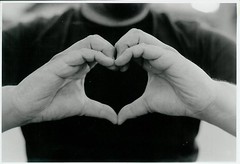
A few inspiring comments from my teachers in simplicity, children.
- I was participating in Seattle’s Martin Luther King, Jr., March and Rally this year with some of the faculty, students and parents from the school I work at. During the march one of our first graders looked up at me and said, “Oh, I know why you’re here today, Ashley.” “Why?” I asked. “Because this is all about friendship… and you’re the friendship teacher.”
(fyi: I host Friendship Groups, a class that all the students in the class participate in just like math or reading. The aim is to help students deepen their ability to connect with and understand themselves and others. It's all about friendship... with ourselves, others and the world around us!) - During Obama's presidential inauguration Rev. Joseph Lowery was talking about love,
"And now, Lord, in the complex arena of human relations, help us to make choices on the side of love, not hate; on the side of inclusion, not exclusion; tolerance, not intolerance."
I looked in front of me as a Kindergartner was staring down at his little hands, shaping them into a heart. That image summed up where my hope for our future lies... in love. - After the inauguration we hosted an Open Space with the 3rd graders. One child's closing remarks, "I learned that when everyone pitches in just a little bit, it can make a giant difference."
- Words of wisdom that a 2nd grader told me over lunch one day that I am practicing and trying to better embody, "Just listen until your mind gets deeper and then you'll understand."
heart photo by samantha celera
February 06, 2009
An Invisible String That Will Stretch and Not Break
An amazing story about the bond between a mother and a daughter. I think it's a beautiful analogy that any family could play with.

Meredith has an ongoing story about an "invisible string" attaching her to her mother. This story began in a literal manner, when she at age two would wrap one end of a string around her mother and then wrap the other end around her own wrist and say that they were "connected forever." The string has morphed into an invisible string, that will "stretch and not break" when necessary, such as when she is at preschool. We have come to think of this string as an indication of her internal emotional state and a metaphor for managing separation.
For example, after a long and challenging day recently, she said that the string was very short and would break if her mother left her side. Her baby sister started crying, however, so then she added that her magic wand had turned the string into a "long golden thread that would stretch and not break" while her mother tended to the baby. "But," she warned, "when Rosie stops crying, it will turn back into a very short string that can break easily." She mentions the string every month or two, and we have come to appreciate her use of creativity and abstraction in expressing her psychological state.
~Seattle Mom
January 29, 2009
Take a Second Look
By Ruth J. Hartman
Sometimes it’s hard to love yourself. This is especially true when you’re fighting mental illness. I was diagnosed at age 27 with severe Obsessive Compulsive Disorder. My thoughts were a tangled mess of repetitive thoughts and unbelievable lies. Although I believed the lies my mind told me. How could I not? It’s all I knew at the time.
The people I love had a hard time understanding why I had suddenly become someone they couldn’t recognize. I realize now that I wasn’t giving those around me enough credit. At first, although I began seeing a psychiatrist and knew what was going on with me, I didn’t trust my family enough to tell them. What would they think of me? Would they disown me? But my parents, as well as my sibling and their spouses, were so very supportive and loving.
My friends were, as well. Maybe I should qualify that: I found out who my true friends were. It was a painful lesson, but one that ultimately showed me who I could trust with my life’s secrets.
My husband never wavered in his love and support. A lesser man would have run screaming through the door. Mine, however, showed me an even deeper love than I ever thought possible. He and I have always been best friends. Soul mates. This illness of mine threatened to shipwreck us, but true love prevailed. He showed me that love is so much more than what you think you’re getting on your wedding day. It’s deep commitment. It’s concern and empathy for someone, even when for the life of you, you don’t understand their actions.
Have you ever met someone who seemed so strange, you wanted to turn away? Pretend they didn’t exist? That’s how I used to react to people. Until I became one of those “strange” people. What I went through changed me forever. Now I find that I have more patience with others with any kind of disability, mental or otherwise.
In my job as a dental hygienist, it’s part of my job to go over a patient’s medical history at every visit. Occasionally, I come across someone who takes the same medication I do, or who has gone through psychiatric treatment. When I go over their histories and come to that section, the patients very often will lower their heads, and avert their eyes. But when I share with them that I’ve gone through something very similar, everything changes. Suddenly there’s camaraderie. A special trust that can only be known by someone who’s been there, who’s gone through something so horrible, only a very few will ever understand. It brings me to tears when I can actually help someone. Even a little. Maybe that’s why I’m here. Maybe that’s part of the reason God put me where I am.
So the next time you come across someone who seems different, unbalanced, “off” somehow, take a deep breath. Show more patience than you normally might have. Believe me, it will mean the world to someone who desperately just needs some understanding and kindness. And on behalf of those you take time to give a second look to, thank you.
 Ruth Hartman is participating in the WOW! Women on Writing Blog Tour, promoting her new book, My Life in Mental Chains: My Struggle with Obsessive Compulsive Disorder. Check it out.
Sometimes it’s hard to love yourself. This is especially true when you’re fighting mental illness. I was diagnosed at age 27 with severe Obsessive Compulsive Disorder. My thoughts were a tangled mess of repetitive thoughts and unbelievable lies. Although I believed the lies my mind told me. How could I not? It’s all I knew at the time.
The people I love had a hard time understanding why I had suddenly become someone they couldn’t recognize. I realize now that I wasn’t giving those around me enough credit. At first, although I began seeing a psychiatrist and knew what was going on with me, I didn’t trust my family enough to tell them. What would they think of me? Would they disown me? But my parents, as well as my sibling and their spouses, were so very supportive and loving.
My friends were, as well. Maybe I should qualify that: I found out who my true friends were. It was a painful lesson, but one that ultimately showed me who I could trust with my life’s secrets.
My husband never wavered in his love and support. A lesser man would have run screaming through the door. Mine, however, showed me an even deeper love than I ever thought possible. He and I have always been best friends. Soul mates. This illness of mine threatened to shipwreck us, but true love prevailed. He showed me that love is so much more than what you think you’re getting on your wedding day. It’s deep commitment. It’s concern and empathy for someone, even when for the life of you, you don’t understand their actions.
Have you ever met someone who seemed so strange, you wanted to turn away? Pretend they didn’t exist? That’s how I used to react to people. Until I became one of those “strange” people. What I went through changed me forever. Now I find that I have more patience with others with any kind of disability, mental or otherwise.
In my job as a dental hygienist, it’s part of my job to go over a patient’s medical history at every visit. Occasionally, I come across someone who takes the same medication I do, or who has gone through psychiatric treatment. When I go over their histories and come to that section, the patients very often will lower their heads, and avert their eyes. But when I share with them that I’ve gone through something very similar, everything changes. Suddenly there’s camaraderie. A special trust that can only be known by someone who’s been there, who’s gone through something so horrible, only a very few will ever understand. It brings me to tears when I can actually help someone. Even a little. Maybe that’s why I’m here. Maybe that’s part of the reason God put me where I am.
So the next time you come across someone who seems different, unbalanced, “off” somehow, take a deep breath. Show more patience than you normally might have. Believe me, it will mean the world to someone who desperately just needs some understanding and kindness. And on behalf of those you take time to give a second look to, thank you.
 Ruth Hartman is participating in the WOW! Women on Writing Blog Tour, promoting her new book, My Life in Mental Chains: My Struggle with Obsessive Compulsive Disorder. Check it out.
March 18, 2007
Childhood Memories from a Workaholic
A professionally successful woman in her late 40’s began to recognize that she was a workaholic. With this new awareness came a difficult practice of re-prioritizing where she expends her time and energy. During this process she wondered what situations in her early life might have helped shape her belief that to belong and be valued, she had to work hard and be successful. Below is a passage from her journal.
I offer this genuine account as a resource to help us better understand the ways in which children perceive how others respond to them, construct beliefs based upon those perceptions, and then make life decisions that stem from those beliefs. I wonder if any of the children in our lives could relate to parts of this story? I also invite us to continue to explore unconditional ways that we can help reinforce each child’s inherent value.
I offer this genuine account as a resource to help us better understand the ways in which children perceive how others respond to them, construct beliefs based upon those perceptions, and then make life decisions that stem from those beliefs. I wonder if any of the children in our lives could relate to parts of this story? I also invite us to continue to explore unconditional ways that we can help reinforce each child’s inherent value.
When did I first start showing signs of workaholism?
As a young child, pre-school age, I had lots of time to kill. My parents both worked and we were often left in the charge of my oldest sister. My brother often beat up on me if we played together, and our house was out in the suburbs, at a time when the suburbs were still mainly woods. If we weren’t out in the woods “exploring” or making forts, then I would be in the house, reading--always the safest choice with my brother around. I could read at a very early age, and I learned to write well before I went to school.
Going to school was very traumatic for me. I felt abandoned by my Mom, and terrified of all the other kids. I guess that makes sense because I pretty much grew up knowing only a handful of kids in our isolated neighborhood. Most of my play time was spent alone, or with my brother, doing unstructured kinds of things rather than playing games.
Because I had never socialized with other kids, I didn’t know what to do during recess. I often walked around by myself. I came to prefer class to recess, and if I could, stayed in at recess to keep working (aha!). I was much more comfortable with the teacher or teacher’s aide, than out on the playground, because it felt so dangerous (all those kids I didn’t know, playing games I didn’t know how to play). Reading was always an acceptable activity--both at home and at school.
I don’t remember being competitive, though, at least for the first two years. I liked the activities (reading groups, making things)….For my first two years of school, I tried hard to do well (but was not the outstanding achiever) and more than anything, I wanted to make friends and be accepted.
We moved when I was eight years old, two things happened:First, I got lots of attention from the teachers because I performed so well. Second, because I was so “smart” the other kids stopped teasing me, and I had some cache as a playmate in competitive learning games. On the playground, marbles was the big game, and I learned how to play, and became a master marble player. Marbles is an everyman-for-himself kind of game, not one that fosters a sense of team spirit or collaboration. Plus we played "for keeps" and I amassed an impressive collection of beautiful marbles that I my parents would never have bought for me. In fact, because of my prowess, playing marbles was banned by the school (after parents complained that their children were spending money on marbles and then losing them). I earned respect on the playground, and in the classroom. In my old town, I was not special. In the new city, I was.
- I was no longer invisible. Because of my accent, the other kids made fun of me (“you talk slow”), and
- because of the better schools where I was from, I was one or two years ahead of my classmates.
In the fourth grade, I was often rewarded with special privileges for being done with work. I ran messages for the teachers, I got to set up activities, and when they started a gifted program, I got to participate (lots of fun learning activities that were self-paced, rather than the rote learning of most classroom activities). My friends were all the gifted students. Being smart and hardworking was what set us apart and gave us our privileges.
At home, the one thing that got praise from Mom was my working hard to help her. So, between school and working at home, the pattern was set. Hard work, and being the best at something, was what made me worthwhile, made me somebody.
Subscribe to:
Posts (Atom)